SEO has become more competitive than ever in 2026, with millions of websites fighting for the same top search positions. Small and medium businesses are struggling to keep up with the constant algorithm updates, technical requirements, and content demands that modern search engines require.
The solution? AI-powered SEO automation tools that offer significant time savings, improved scalability, and better results than traditional manual approaches. These intelligent systems can handle repetitive tasks, analyze massive datasets, and provide actionable insights that help businesses compete more effectively in today’s digital landscape.
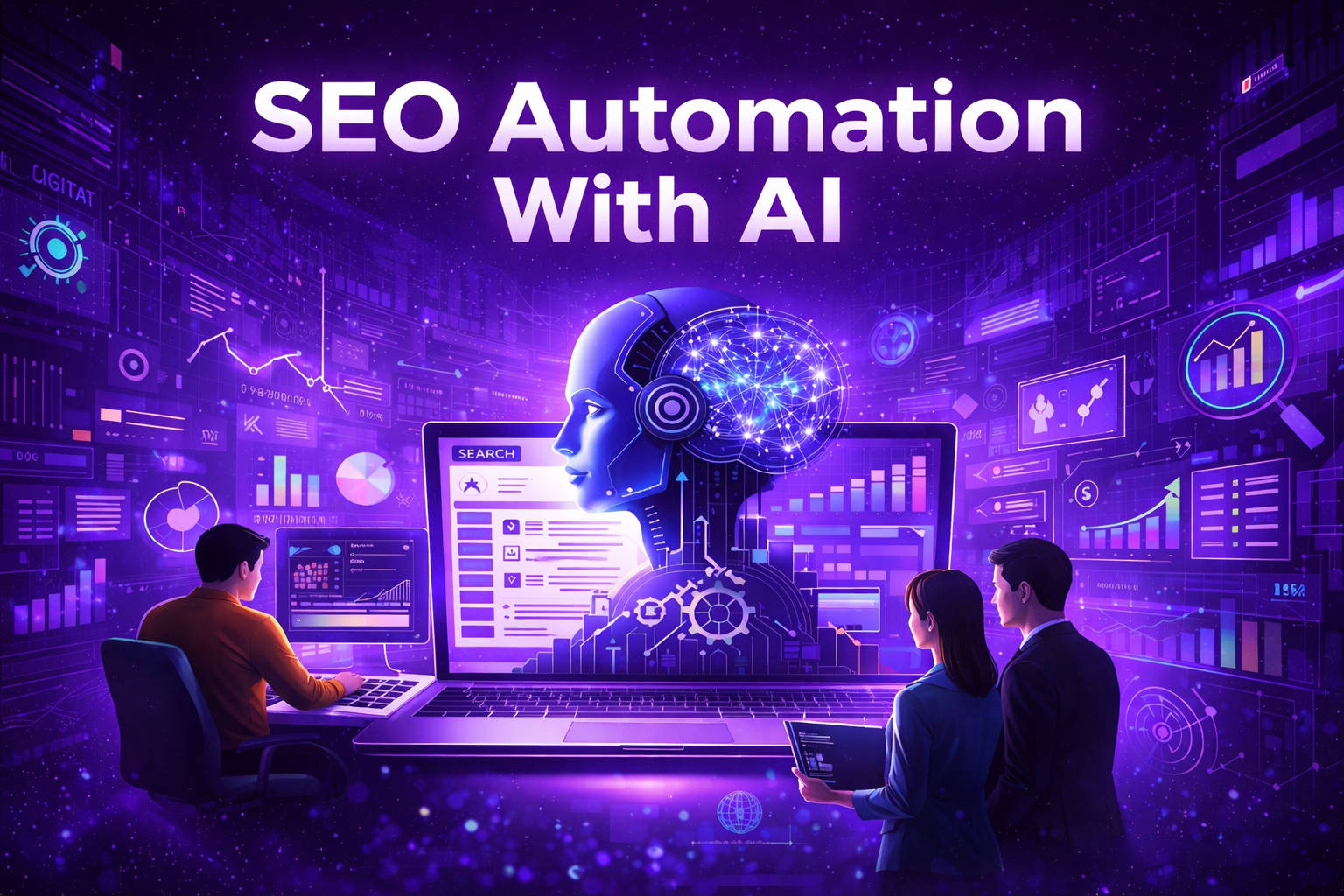
Quick Answer: SEO automation with AI helps businesses streamline workflows, optimize content, and improve rankings faster by using smart computer programs and AI SEO tools. AI-driven SEO automation reduces manual tasks like keyword grouping, technical audits, and performance tracking, freeing up teams to focus on strategy and growth.
It provides data-backed insights in real time, helping businesses adapt to algorithm changes, identify new opportunities, and scale content production efficiently.
Summary: 7 Key Benefits of SEO Automation with AI
- Automated Keyword Research Saves Time: AI quickly identifies high-value keywords, reducing manual research hours.
- AI Content Optimization Improves Quality: Content is automatically aligned with SEO best practices and user intent.
- SEO Workflow Automation Boosts Efficiency: Repetitive tasks like reporting and tracking are handled automatically.
- Scalable SEO Processes for Growing Businesses: AI manages larger campaigns and datasets as your business expands.
- Improved Decision-Making with Data-Driven Insights: Real-time analysis provides actionable recommendations.
- Enhanced Local SEO Strategies: AI optimizes for location-specific keywords and local search trends.
- Cost Savings with AI SEO Software for Small Businesses: Automation reduces the need for large teams and expensive agencies.
Why AI is Transforming SEO in 2026
The complexity of SEO today makes manual processes less effective and incredibly time-consuming. What used to work with basic keyword stuffing and simple link building now requires a deeper understanding of what users are looking for, technical optimization, and content quality signals.
AI brings data-driven insights and efficiency to SEO strategies by processing information faster than any human team could manage. This technology helps businesses make smarter decisions based on real-time data rather than guesswork or outdated tactics.
The Role of Machine Learning in SEO
Machine learning analyzes large datasets to predict trends and optimize strategies automatically. These systems learn from search patterns, user behavior, and ranking factors to suggest improvements that actually work.
Unlike static SEO approaches, machine learning for SEO adapts continuously. The programs become smarter over time, identifying patterns that humans might miss and suggesting optimizations based on what’s currently working in your specific industry.
How AI-Powered SEO Tools Work
AI tools automate keyword research, content optimization, and performance tracking through advanced computer programs. They connect to search engines, analyze competitor data, and process user behavior signals to provide comprehensive recommendations.
These tools work by scanning your website, comparing it against top-performing competitors, and identifying specific areas for improvement. They can suggest everything from technical fixes to content gaps that need attention.

1. Automated Keyword Research Saves Time
AI identifies high-value keywords faster and more accurately than traditional research methods. Instead of spending hours manually analyzing search volumes and competition levels, AI tools can process thousands of keyword opportunities in minutes.
The focus shifts to intent-driven keywords with predictive analytics that show which terms are likely to become more valuable over time. This forward-thinking approach helps businesses get ahead of trends rather than always playing catch-up.
How AI Identifies the Best Keywords
AI tools analyze competitor data and search trends in real time, identifying opportunities that manual research often misses. They examine how keywords are related in meaning, search intent patterns, and seasonal fluctuations to recommend the most strategic targets.
Automated keyword research also considers your website’s current authority and realistic ranking potential. This prevents businesses from wasting time on impossibly competitive terms while highlighting achievable opportunities for growth.
2. AI Content Optimization Improves Quality
AI ensures content aligns with SEO best practices and user intent automatically. These systems analyze top-ranking content for your target keywords and provide specific recommendations for improvement.
AI-powered language analysis helps refine tone and relevance, making sure your content sounds natural while still being optimized for search engines. This balance is crucial for ranking well and keeping readers engaged.
AI-Driven Content Suggestions
AI tools recommend improvements to headlines, meta descriptions, and readability based on what’s currently working in search results. They analyze factors like sentence length, paragraph structure, and keyword density to optimize for both search engines and human readers.
AI content optimization also suggests related topics and questions to include, helping create more comprehensive content that addresses user needs completely. This thorough approach often leads to higher rankings and longer time-on-page metrics.
3. SEO Workflow Automation Boosts Efficiency
Automate repetitive tasks like reporting and performance tracking to free up valuable time for strategic work. AI systems can monitor rankings, track backlinks, and generate comprehensive reports without human intervention.
This allows teams to focus on strategic decision-making instead of manual processes. Rather than spending hours compiling data, professionals can analyze insights and develop creative solutions for business growth.
SEO workflow automation also ensures consistency in monitoring and reporting. Important changes or opportunities are flagged immediately, preventing small issues from becoming major problems.
4. Scalable SEO Processes for Growing Businesses
AI tools accommodate growth by managing larger datasets and campaigns without requiring proportional increases in team size. As your business expands to new markets or product lines, AI systems can scale your SEO efforts accordingly.
Small businesses can compete with larger companies using scalable SEO processes that were previously only available to enterprises with massive budgets. AI democratizes access to sophisticated SEO capabilities.
These systems handle increased content volumes, monitor more keywords, and track additional competitors as your business grows. The technology adapts to your expanding needs without requiring complete strategy overhauls.
5. Improved Decision-Making with Data-Driven Insights
AI provides actionable insights through real-time data analysis that goes far beyond basic ranking reports. These systems identify correlation patterns, predict future trends, and recommend specific actions based on comprehensive data analysis.
Make informed decisions about campaigns and content priorities using insights that consider multiple variables simultaneously. AI can process factors like seasonality, competitor actions, and algorithm updates to provide contextual recommendations.
This data-driven approach reduces guesswork and helps businesses invest their SEO resources in activities that are most likely to generate positive results. The insights become more accurate over time as the AI learns from your specific industry and audience.
6. Enhanced Local SEO Strategies
AI tools optimize for location-specific keywords and queries by analyzing local search patterns and competition. They identify opportunities in specific geographic areas and suggest content that resonates with local audiences.
Track local search trends to improve visibility in your area using AI systems that monitor local pack rankings, review patterns, and competitor activities. This localized approach is especially valuable for service-based businesses and retail locations.
AI can also optimize Google Business Profile content, suggest local link building opportunities, and identify the most effective local keywords for your specific market area.
7. Cost Savings with AI SEO Software for Small Businesses
AI reduces dependency on large teams by automating key processes that previously required multiple specialists. Small businesses can achieve enterprise-level SEO results without hiring extensive in-house teams or expensive agencies.
Achieve high ROI with budget-friendly tools designed specifically for smaller businesses. Many AI SEO software for small businesses options offer tiered pricing that grows with your needs, making advanced SEO accessible regardless of budget size.
The time savings alone often justify the investment, as business owners can focus on revenue-generating activities rather than technical SEO tasks. The improved results typically lead to increased organic traffic and higher conversion rates.
How to Get Started with AI-Powered SEO Automation
Identify areas of your SEO strategy that can benefit from automation by auditing your current processes. Look for repetitive tasks, time-consuming research activities, and areas where you need more consistent monitoring.
Research and invest in AI SEO tools that fit your business needs and budget. Start with one or two core functions rather than trying to automate everything at once. This gradual approach allows you to learn the systems and measure results effectively.
Top AI SEO Tools for 2026
| Tool | Main Function | Best For | Key Features |
|---|---|---|---|
| Jasper | AI Content Creation | Generating SEO-optimized content | Natural language generation, content templates, tone adjustment |
| Surfer SEO | Content Optimization | Improving on-page SEO | Content analysis, keyword suggestions, SERP analysis |
| Ahrefs | Keyword Research & Competitor Analysis | Comprehensive SEO research | Backlink analysis, keyword explorer, site audits |
| Clearscope | Content Optimization | Enhancing content quality | Topic research, content grading, keyword recommendations |
| MarketMuse | Content Strategy | Planning and optimizing content | Content briefs, topic modeling, competitive analysis |
| BrightEdge | Enterprise SEO Automation | Large-scale SEO management | Automated reporting, recommendations, performance tracking |
Popular tools include Jasper for AI-powered content creation, Surfer SEO for content optimization, and Ahrefs for comprehensive keyword research and competitor analysis. Each tool specializes in different aspects of SEO automation.
Other notable options include Clearscope for content optimization, MarketMuse for content strategy, and BrightEdge for enterprise-level SEO automation. Choose tools based on your specific needs rather than trying to use every available option.
The Strategic Advantage of AI-Enhanced SEO
SEO automation with AI is not about replacing strategy, it’s about enhancing it. Businesses that combine automation with human oversight gain a competitive edge by making faster, more informed decisions while maintaining creative and strategic thinking.
Companies that adopt AI-powered SEO early can scale content production, improve efficiency, and respond faster to search engine changes than competitors relying on manual processes. This agility becomes increasingly important as search algorithms become more advanced.
Automation reduces repetitive tasks, lowers operational costs, and allows teams to focus on revenue-driving initiatives like conversion optimization and brand growth. The time saved can be reinvested in creative campaigns and strategic partnerships.
Businesses that integrate SEO automation thoughtfully position themselves for future search trends, including AI-driven search experiences and evolving ranking systems. Early adoption provides valuable experience and data that inform long-term strategic decisions.
Frequently Asked Questions
What is SEO automation with AI?
SEO automation with AI refers to using artificial intelligence-powered tools to streamline SEO processes like keyword research, content optimization, and data analysis. These tools use smart computer programs to analyze large amounts of data, identify patterns, and make recommendations that improve search engine rankings.
AI automation handles repetitive tasks automatically, allowing SEO professionals to focus on strategy and creative work while ensuring consistent optimization across all content and campaigns.
Are AI SEO tools affordable for small businesses?
Yes, many AI SEO tools offer scalable pricing options suitable for smaller budgets. Most providers understand that small businesses need powerful SEO capabilities without enterprise-level costs, so they offer tiered pricing plans that start affordably.
Some tools also provide free trials or limited free versions that allow businesses to test functionality before committing to paid plans. The cost savings from increased efficiency and better results often justify the investment quickly.
How does AI improve content optimization?
AI analyzes content for readability, keyword usage, and relevance to user intent by comparing your content against top-performing pages in search results. The technology provides specific suggestions to improve rankings and user engagement, including recommendations for headline improvements, meta descriptions, internal linking, and content structure.
AI also identifies content gaps and suggests related topics to include, helping create more comprehensive content that fully addresses user needs and search intent.
Can AI completely replace SEO professionals?
No, AI is a tool that enhances efficiency, but strategic oversight from professionals is still essential for successful SEO campaigns. While AI excels at data analysis, pattern recognition, and automating repetitive tasks, human expertise is needed for strategic planning, creative problem-solving, and understanding business context.
AI complements human expertise to deliver better results by handling time-consuming tasks and providing data-driven insights that inform strategic decisions.
What are the best AI-powered SEO tools in 2026?
Popular AI-powered SEO tools in 2026 include Jasper for AI content creation, Surfer SEO for content optimization, and Ahrefs for comprehensive keyword research and competitor analysis. Other effective options include Clearscope for content optimization, MarketMuse for content strategy planning, and BrightEdge for enterprise-level SEO automation.
The best tool depends on your specific needs, budget, and current SEO challenges, so consider starting with free trials to determine which platform works best for your business.