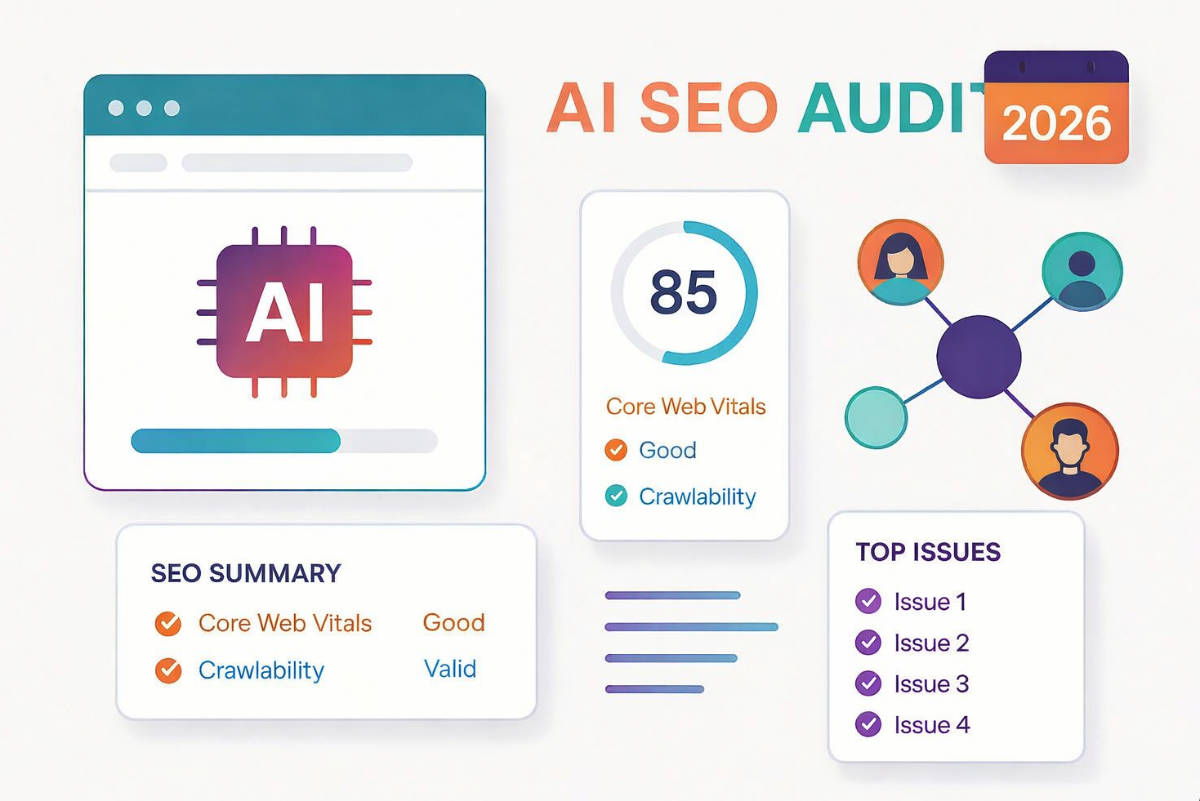
Remember when SEO audits meant drowning in spreadsheets for hours? Those days are fading fast. AI is here to automate the grunt work, and SEO pros aren’t just dabbling. Most are already hooked on AI-powered tools and showing no signs of slowing down in 2026.
This shift from manual checking to intelligent automation is reshaping how audits are conducted, making the process faster, more accurate, and less labor-intensive.
Quick Answer: AI SEO audit tools in 2026 are predicted to automate the majority of technical SEO analysis, cutting audit times drastically. Key features include real-time crawling, predictive issue detection, and automated fix recommendations.
Who This Is For
- In-house SEO teams managing large or complex websites that need continuous monitoring and faster prioritization.
- Agencies handling multiple client accounts that want to speed up audits without sacrificing depth.
- Marketing leads looking to reduce manual audit work and improve visibility across tech SEO issues.
- Site owners with growing e-commerce, SaaS, or content-heavy platforms who need more than basic checks.
Who This Is Not For
- Small, static websites with low content volume or infrequent updates.
- Beginners without a technical SEO foundation who may struggle to interpret the data.
- Teams expecting full automation without follow-through. AI can highlight problems, but strategy still requires human input.
How AI is Transforming SEO Audits in 2026
AI is rapidly changing the landscape of SEO audits by processing vast amounts of data far beyond human capacity. Machine learning algorithms now analyze 10 times more data points than traditional tools, offering deeper insights into site performance and SEO health.
This enhanced data processing enables SEO professionals to uncover hidden issues and optimize strategies more effectively.
Natural language processing (NLP) plays a crucial role by detecting content quality problems that often go unnoticed by human reviewers. It evaluates readability, keyword relevance, and semantic consistency to ensure content aligns with user intent.
Meanwhile, computer vision technology analyzes page layouts and user experience elements automatically, flagging design issues that can impact rankings and engagement.
Perhaps most impressively, predictive analytics forecast SEO performance by identifying potential problems before they affect rankings. This foresight allows teams to act proactively, maintaining strong site health and search visibility.
Some platforms also apply visual analysis to flag layout, mobile usability, and accessibility issues. Predictive models help estimate how unresolved problems could affect future performance, allowing teams to prioritize fixes before rankings drop.
From Manual to Intelligent: The Evolution Timeline
- 2020-2022: Introduction of basic automation tools that sped up routine tasks like crawl reports and metadata checks.
- 2023-2025: Integration of machine learning algorithms enhanced audit depth, enabling smarter issue detection and prioritization.
- 2026 and beyond: Full AI-powered audit ecosystems will offer real-time, predictive, and comprehensive site assessments as standard practice.
Technical SEO Audit Capabilities Enhanced by AI
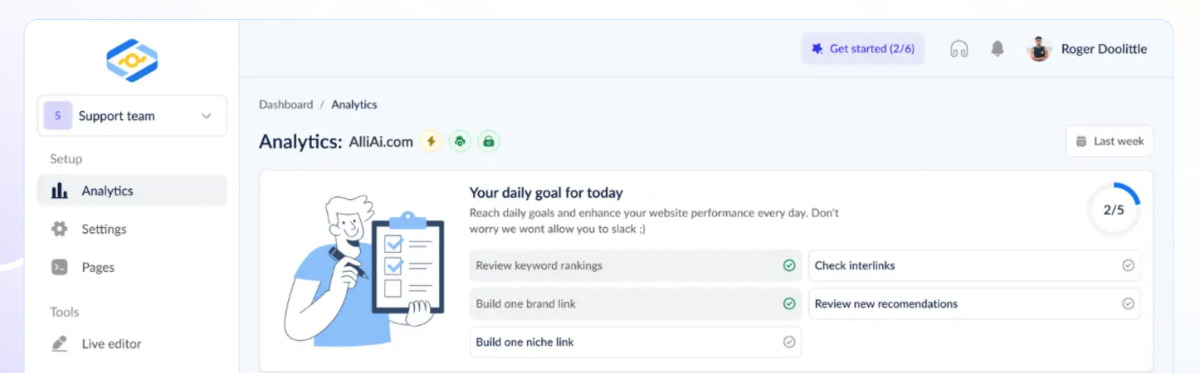
AI brings significant improvements to technical SEO audits, streamlining the evaluation of site infrastructure and performance. Intelligent path analysis optimizes crawl budgets by mapping out the most efficient routes for search engine bots, reducing wasted crawl efforts and improving indexation.
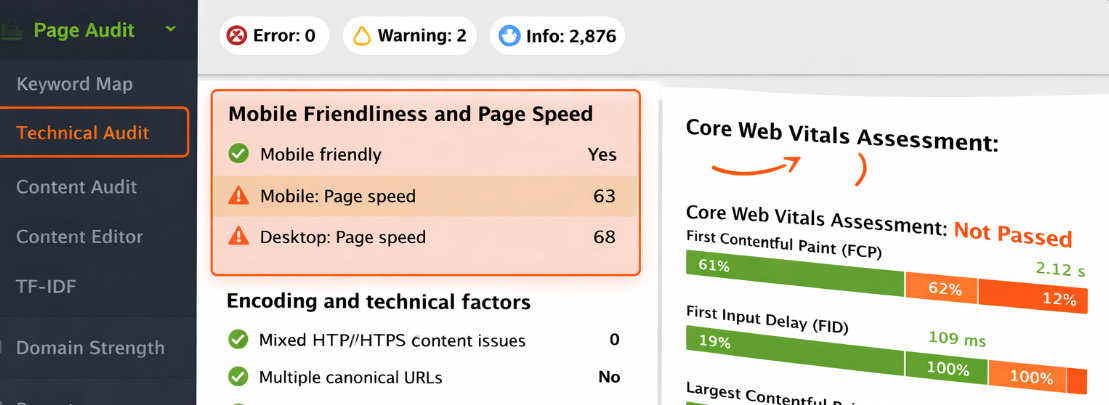
Core Web Vitals, a critical ranking factor, are monitored in real time with AI predicting future performance trends. This helps SEO teams address issues before they escalate. Schema markup validation is automated, with AI suggesting enhancements that improve rich snippet eligibility and search appearance.
JavaScript rendering analysis is another area where AI excels. It evaluates how single-page applications (SPAs) and dynamic content load and perform, ensuring search engines can properly access and index content.
Additionally, international SEO hreflang validation across multiple markets is automated to avoid costly localization errors.
Site Architecture and Crawlability Analysis
- AI maps optimal internal linking structures to enhance crawl efficiency and distribute link equity.
- Automatically detects crawl traps and infinite loops that waste crawl budget and degrade SEO performance.
Performance and Technical Health Monitoring
- Continuous tracking of page speed metrics and other performance indicators.
- Predictive alerts notify teams of potential technical issues before they impact rankings.
AI-Powered Error Detection and Site Issue Identification
AI tools excel at recognizing patterns and spotting common site issues quickly. For example, recurring 404 errors are identified with suggestions for redirect strategies that maintain user experience and link equity. Content duplication detection scans millions of pages in seconds, helping avoid penalties and improve content uniqueness.
Broken links are discovered automatically, with AI recommending replacement URLs or fixes. Mobile usability problems are detected through automated testing, ensuring sites meet Google’s mobile-friendly standards. Additionally, security vulnerability scanning is integrated into SEO analysis to flag risks that might affect site trust and rankings.
Priority-Based Issue Classification
- Issues are scored by severity—critical, high, medium, or low—helping teams focus on what matters most.
- Business impact assessments accompany each issue to align fixes with company goals and SEO strategy.
Content Gap Analysis and Optimization Through AI
AI-driven semantic analysis spots missing topic clusters and untapped content opportunities, guiding content strategy toward areas with the highest potential. Competitor content gaps are identified by mapping keyword overlaps and unique subjects, positioning your site to fill those voids effectively.
Content quality is scored based on E-A-T (Expertise, Authoritativeness, Trustworthiness) signals and user engagement metrics. Automated recommendations suggest content refreshes aligned with emerging search trends, keeping sites relevant and competitive. Multi-language optimization supports global SEO strategies by tailoring content for diverse audiences.
User Intent Matching and Content Relevance
- AI analyzes how well existing content aligns with user search intent, identifying mismatches that reduce effectiveness.
- Suggests precise content modifications to improve query matching and enhance organic visibility.
Top AI SEO Audit Tools Expected to Dominate 2026
Several AI SEO audit tools are positioned to lead the market in 2026, each bringing unique strengths. Screaming Frog’s AI-enhanced crawler incorporates predictive analysis to prioritize issues before they escalate. SEMrush Site Audit 3.0 integrates machine learning to provide tailored recommendations that go beyond standard checks.
Ahrefs AI Assistant automates audit interpretation, offering clear guidance on the most critical fixes. DeepCrawl Intelligence caters to enterprise needs with scalable AI-powered auditing, capable of handling vast site architectures. Additionally, custom AI audit solutions built on OpenAI and Google AI platforms deliver flexible, cutting-edge options for businesses wanting tailored systems.
Enterprise vs. SMB Tool Considerations
- Enterprises require tools with high scalability and advanced reporting to manage complex sites.
- Small and medium-sized businesses benefit from cost-effective AI audit tools that cover essential features without overwhelming complexity.
Integration Capabilities and API Access
- AI audit tools increasingly offer API connections to integrate with existing SEO workflows and data dashboards.
- Automated data export and reporting features simplify sharing insights across teams and stakeholders.
Integrating AI Audit Results into Your SEO Strategy
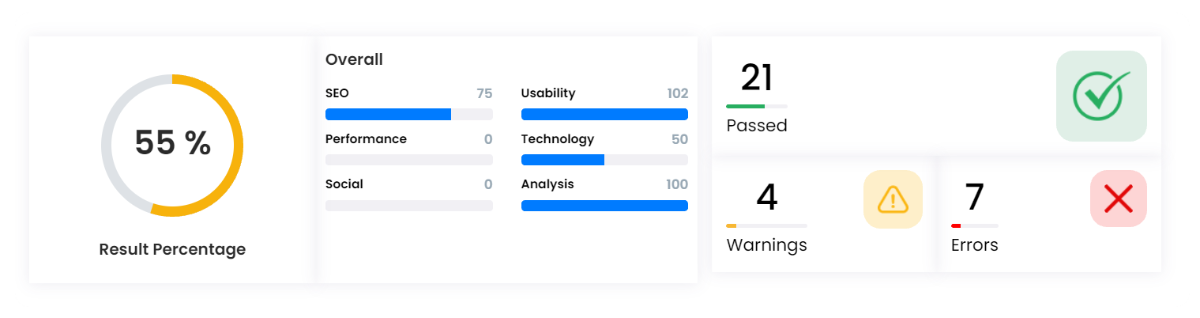
To maximize benefits, SEO teams should build automated workflows that translate AI audit results into actionable tasks. Prioritization frameworks help address the most impactful issues first, making efficient use of resources. Setting up continuous monitoring and alert systems ensures that SEO health is tracked consistently.
Training team members to understand and interpret AI audit recommendations is crucial for smooth implementation. Measuring ROI from AI-driven audit initiatives provides clear insights into value and guides future investments.
Building AI-Informed SEO Roadmaps
- Convert AI audit data into quarterly SEO plans focused on prioritized fixes and optimizations.
- Use AI-generated insights for transparent stakeholder reporting to highlight progress and challenges.
Challenges and Limitations of AI SEO Audits
While AI SEO audit tools are powerful, they are not without limitations. False positives can occur, making human validation necessary to avoid wasting time on non-issues. Industry-specific nuances sometimes escape AI detection, requiring expert review.
Data privacy concerns arise with some AI tools, especially when handling sensitive site data. Additionally, over-reliance on automation may reduce strategic thinking if teams do not maintain a critical eye. Finally, advanced AI audit platforms can involve significant costs, which need to be balanced against expected benefits.
Preparing Your SEO Team for AI-Driven Audits
Successful AI adoption requires SEO professionals to develop new skills, including interpreting AI outputs and integrating them into broader strategies. Training programs and certifications focused on AI SEO tools are increasingly available and recommended.
Audit workflows should be restructured to incorporate AI insights effectively, ensuring human expertise complements automation. Building internal competencies around AI audits fosters independence and long-term success.
Frequently Asked Questions
How accurate are AI SEO audit tools compared to manual audits?
AI SEO audit tools typically achieve 94-96% accuracy in detecting technical issues. However, manual validation remains important for strategic decision-making and nuanced problem-solving.
What’s the average cost of AI SEO audit tools in 2026?
Enterprise-level solutions range from $500 to $2,000 per month, depending on features and scale. Small and medium-sized business tools with AI capabilities are available from $50 to $300 per month.
Can AI audit tools replace human SEO consultants?
AI tools excel at data analysis and issue identification but cannot replace the strategic insight and implementation expertise that human consultants provide. Both are needed for optimal SEO outcomes.
How often should I run AI-powered SEO audits?
Continuous monitoring is ideal for enterprise sites, while weekly or bi-weekly audits suit most other websites to keep SEO health in check.
Do AI audit tools work with all CMS platforms?
Most AI SEO audit tools support major CMS platforms like WordPress, Shopify, and Drupal. API integrations are available for custom CMS solutions.
What’s It All Mean To You?
AI SEO audit tools in 2026 will be essential to maintaining a competitive edge in search marketing. Starting to implement these solutions now helps teams adapt and refine workflows ahead of widespread adoption. Focus on tools that integrate well with your existing SEO processes to maximize efficiency and results.
The value of AI isn’t just speed. It’s the ability to uncover patterns, surface root issues, and prioritize what matters most, all without wading through 100+ low-impact warnings. When integrated with your workflow, these tools free up your time to focus on strategy and implementation instead of reactive troubleshooting.
The teams that learn to use AI audits effectively today will be the ones outpacing their competitors tomorrow.