
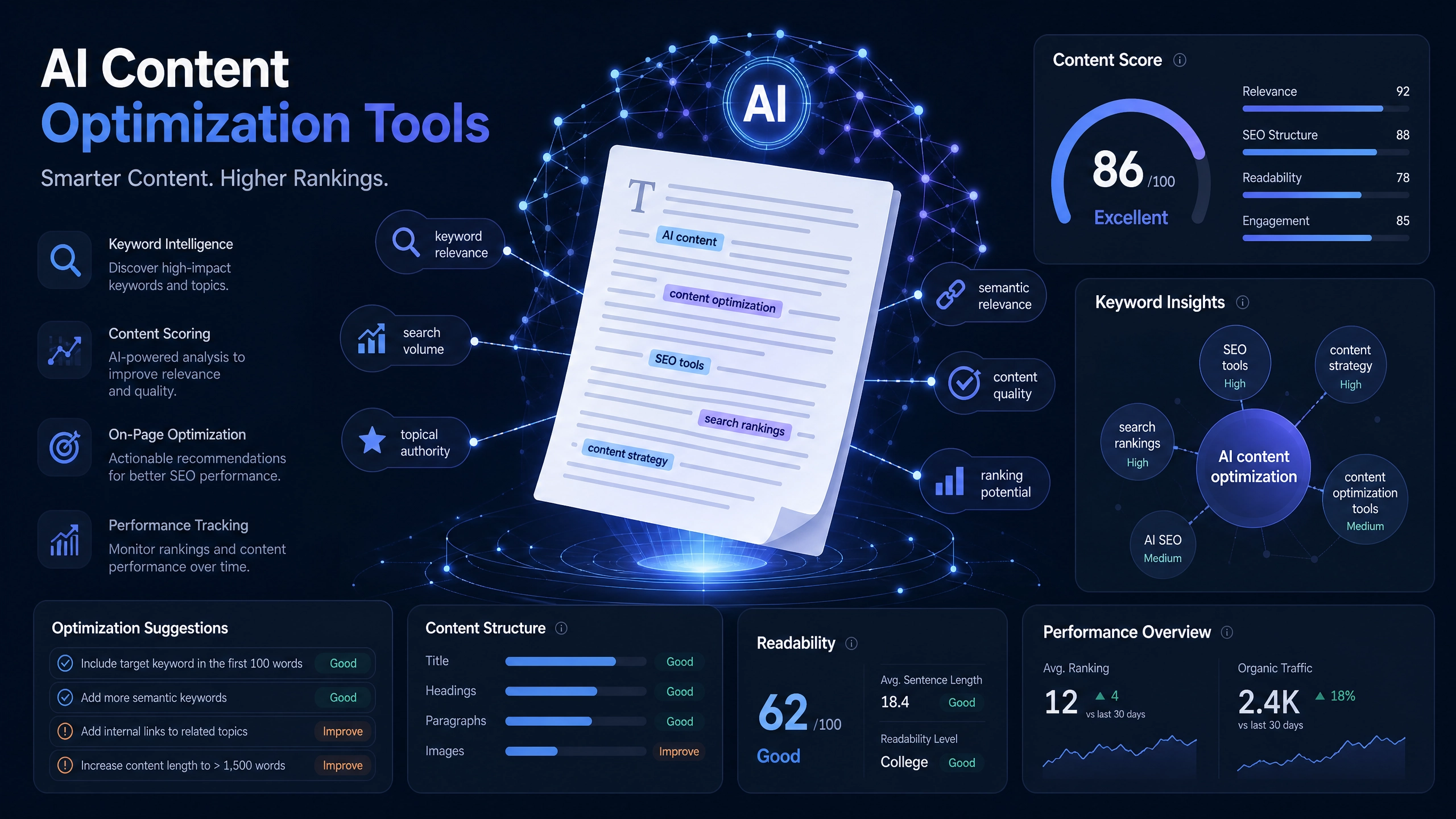
The Evolution of AI in Content Optimization
A few years ago, AI tools for content mostly meant basic keyword density checkers and readability scores. That is no longer the case. Today, AI-powered content tools analyze search intent, map semantic relationships between topics, and provide real-time feedback as you write.
The shift has been gradual but significant. What started as simple suggestions has grown into full workflow support, from initial research through final optimization. Understanding where this growth is heading helps you make smarter decisions about which tools to invest in.
Market Growth and Adoption
The market for AI content optimization software is expanding at a meaningful pace. The sector is projected to grow at a compound annual growth rate of 25% through 2028. That kind of growth reflects real demand from businesses of all sizes, not just enterprise teams.
Adoption is accelerating because the tools have become more accessible. Many platforms now offer tiered pricing, beginner-friendly interfaces, and integrations with tools like Google Docs, WordPress, and popular CMS platforms. You do not need a technical background to get started.
AI's Role in Modern Content Strategies
By 2026, AI tools are embedded in more than 80% of enterprise content workflows. Even outside of large organizations, freelancers and small marketing teams are relying on these tools to keep up with content demands without adding headcount.
The practical impact is clear. AI-powered content strategies allow teams to produce more pieces, optimize existing pages faster, and make data-informed decisions about what to write next. If you want to understand how content formats are being shaped by AI-driven search, it helps to explore how content formats perform in Google AI Overviews and adjust your approach accordingly.
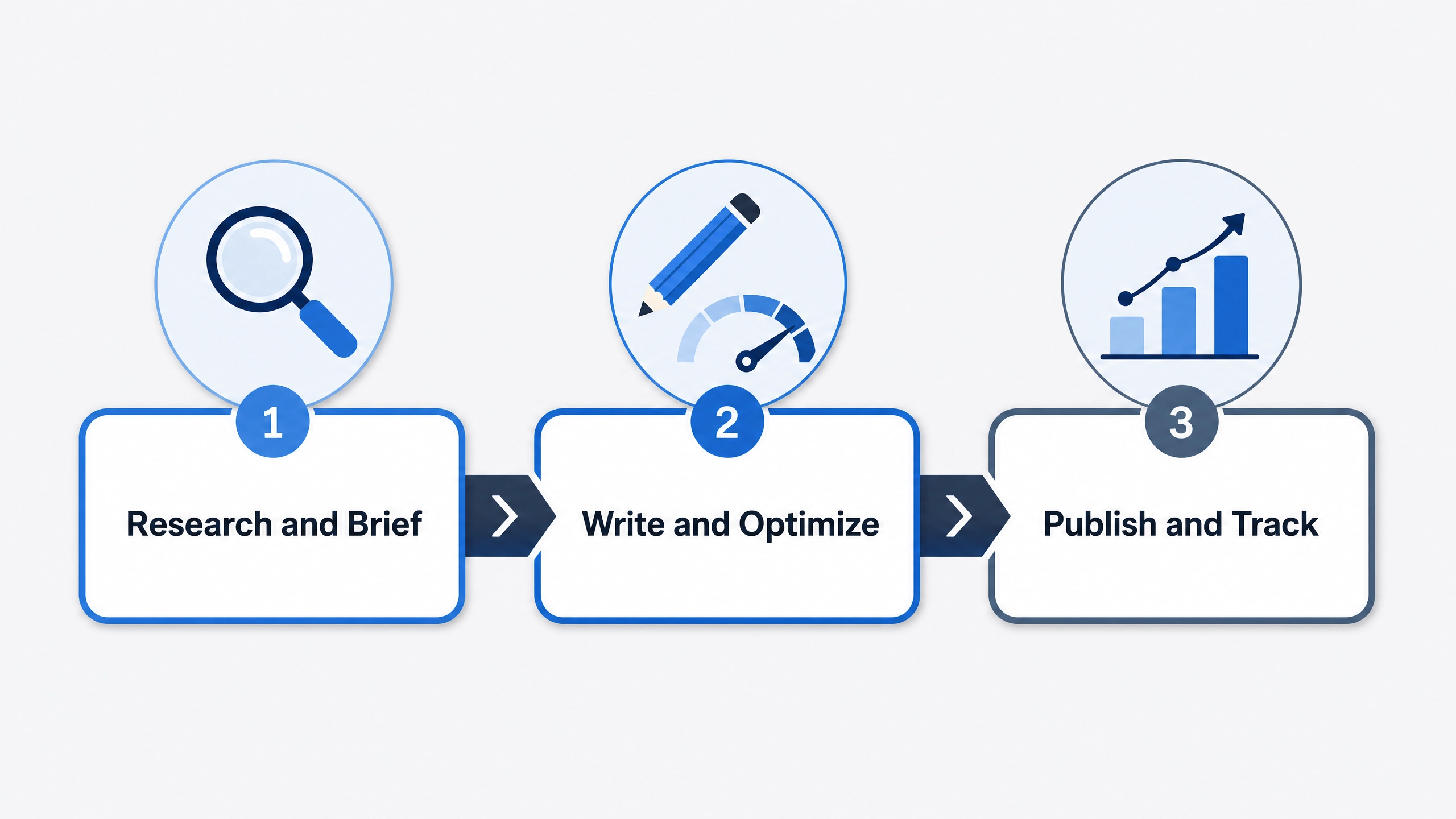
A three-stage AI content workflow: research and brief, write and optimize, publish and track.
Top AI-Powered Content Optimization Tools of 2026
Not every tool fits every workflow. The options below cover different use cases, from on-page optimization to full content planning. Each one has earned a place in the toolkit of serious content creators and SEO professionals.
Surfer SEO: On-Page Optimization
Surfer SEO focuses on what happens after you choose a topic. It analyzes the top-ranking pages for your target keyword and gives you a real-time content score based on factors like word count, heading structure, and keyword usage. The scoring system updates as you write, so you always know where you stand.
The tool uses natural language processing to identify semantically related terms that should appear in your content. This goes beyond primary keywords. It helps you build articles that cover a topic thoroughly, which is exactly what search engines reward. Pairing Surfer SEO with a solid on-page SEO checklist gives you a repeatable process for every article you publish.
Clearscope: Enhanced Content Briefs
Clearscope is built around the brief creation process. It pulls together keyword data, related terms, and competitor analysis into a structured brief that writers can follow from the start. The result is content that is well-targeted before a single word is written.
Tools that streamline the content planning process can improve time-to-publish by 30 to 45%. Clearscope addresses exactly that bottleneck. When your writers know what to cover and how to structure it, the editing and optimization phase becomes much shorter.
MarketMuse: Full Content Workflow
MarketMuse takes a broader view. Rather than focusing on a single article, it maps your entire content library and identifies gaps, opportunities, and pages that could benefit from updates. It then helps you draft, optimize, and track performance all within one platform.
For anyone managing a large site or a client's content strategy, this kind of visibility is genuinely useful. You can see which topics you own, where competitors have an edge, and what to prioritize next. It is one of the more comprehensive content optimization software options available in 2026.
Pro Tip
When using AI tools for content optimization in 2026, review their output against your key performance metrics (like time on page or bounce rate) every month. This keeps the AI aligned with your evolving goals and helps you catch any drift from changes in search engine behavior. Consistent review turns a good tool into a reliable one.
What About AI Search Visibility?
There is one dimension that Surfer SEO, Clearscope, and MarketMuse do not address: how your content performs inside AI Overviews and Google's AI Mode. These are now separate traffic channels with their own impression and click data, and they require a different kind of monitoring.
That is where RankPilot fits into the picture. Rather than replacing the tools above, RankPilot sits alongside them and tracks the AI search layer that traditional content optimization tools were not built to see. If you are already using Surfer SEO or Clearscope to optimize your writing, RankPilot shows you whether that optimized content is actually showing up in AI-generated answers. It is the missing piece for teams that want a complete view of their content's reach in 2026 search. You can read more about generative engine optimization to understand why this visibility layer matters.
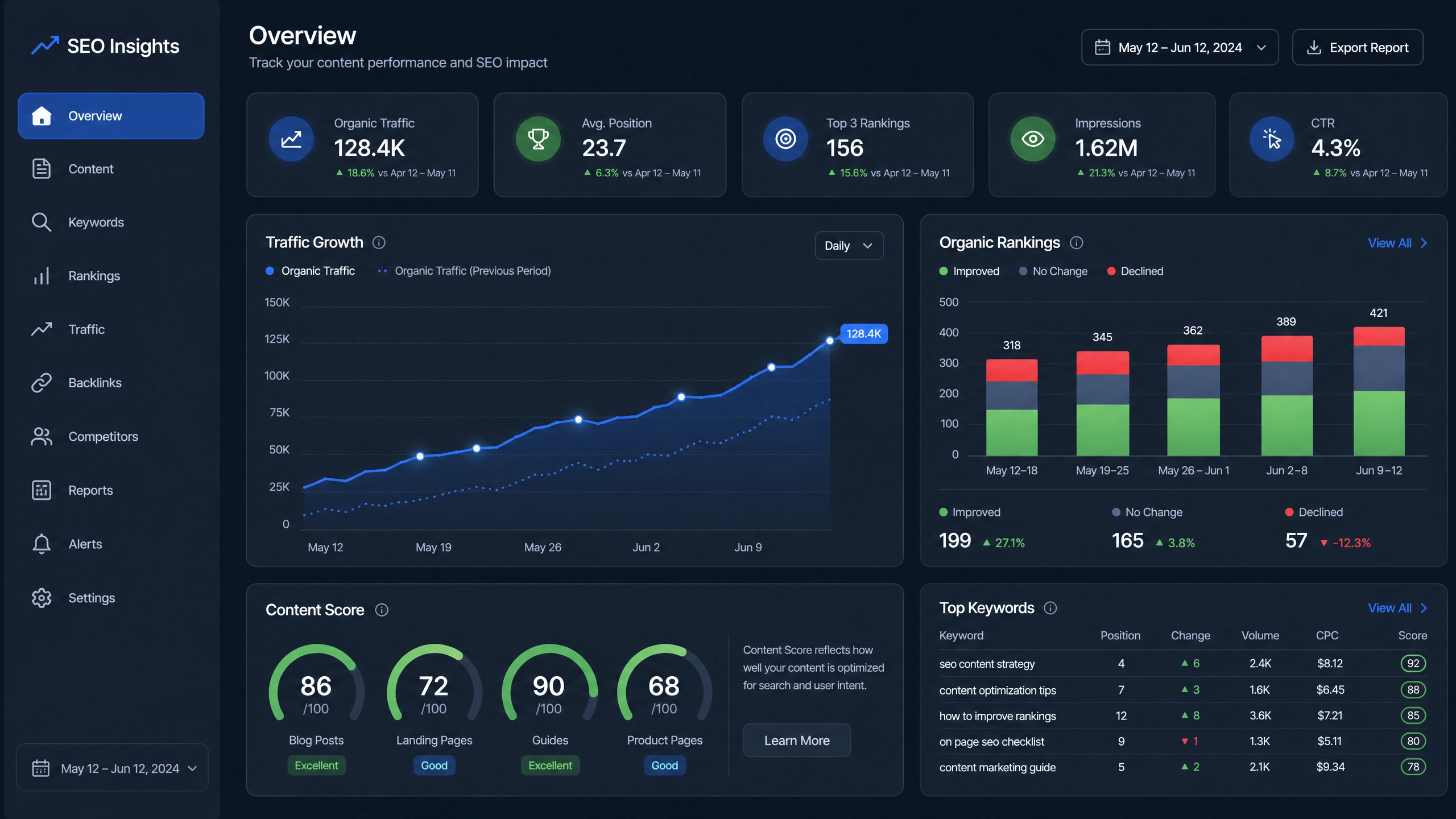
Tracking content performance metrics is essential for measuring the real impact of AI optimization tools.
Integrating AI Tools into Your Workflow
Choosing a tool is only the first step. Getting real value from AI content optimization tools depends on how well they fit into the way you already work. A tool that adds friction or requires constant manual workarounds will not stick, no matter how capable it is.
The good news is that most leading platforms are designed with integration in mind. They connect to the tools you already use and can be introduced gradually without overhauling your entire process.
Assessing Your Current Workflow
Before adding any new tool, take stock of where your content process slows down. Common bottlenecks include keyword research, brief creation, editing for SEO, and tracking what is actually working. Identifying those gaps helps you choose a tool that solves a real problem rather than adding another subscription to manage.
For example, if you spend hours auditing old content to find what needs updating, a tool like MarketMuse or a focused audit workflow can recover that time. You can get a sense of what a faster audit process looks like by reading about running a content audit in 90 minutes with AI tools. That kind of time saving adds up quickly across a month of work.
Step-by-Step: Integrating AI Tools into Your Content Workflow
- Audit your current bottlenecks: Identify where your content process slows down, such as keyword research, brief creation, or SEO editing.
- Select a tool that targets that gap: Choose an AI tool designed to address your specific workflow challenge, ensuring it integrates smoothly with your existing systems.
- Set a baseline metric: Establish clear metrics (like time-to-publish, ranking positions, or engagement rates) before implementing the tool so you can measure its impact.
- Review results monthly: Track performance and adjust your approach based on data, refining your workflow as you learn what works best.
Measuring Success with AI Tools
Once you have integrated a tool, tracking its impact keeps your investment honest. The metrics worth watching include organic ranking changes for optimized pages, engagement signals like time on page and scroll depth, and how quickly your team moves from brief to published article.
Set a baseline before you start so you have something to compare against. Even a simple spreadsheet tracking weekly ranking positions for your target pages will show you whether the tool is moving the needle. If you want a more structured approach to monitoring AI-driven visibility, learning how to use the Google Search Console AI visibility report gives you a reliable data source for those conversations.
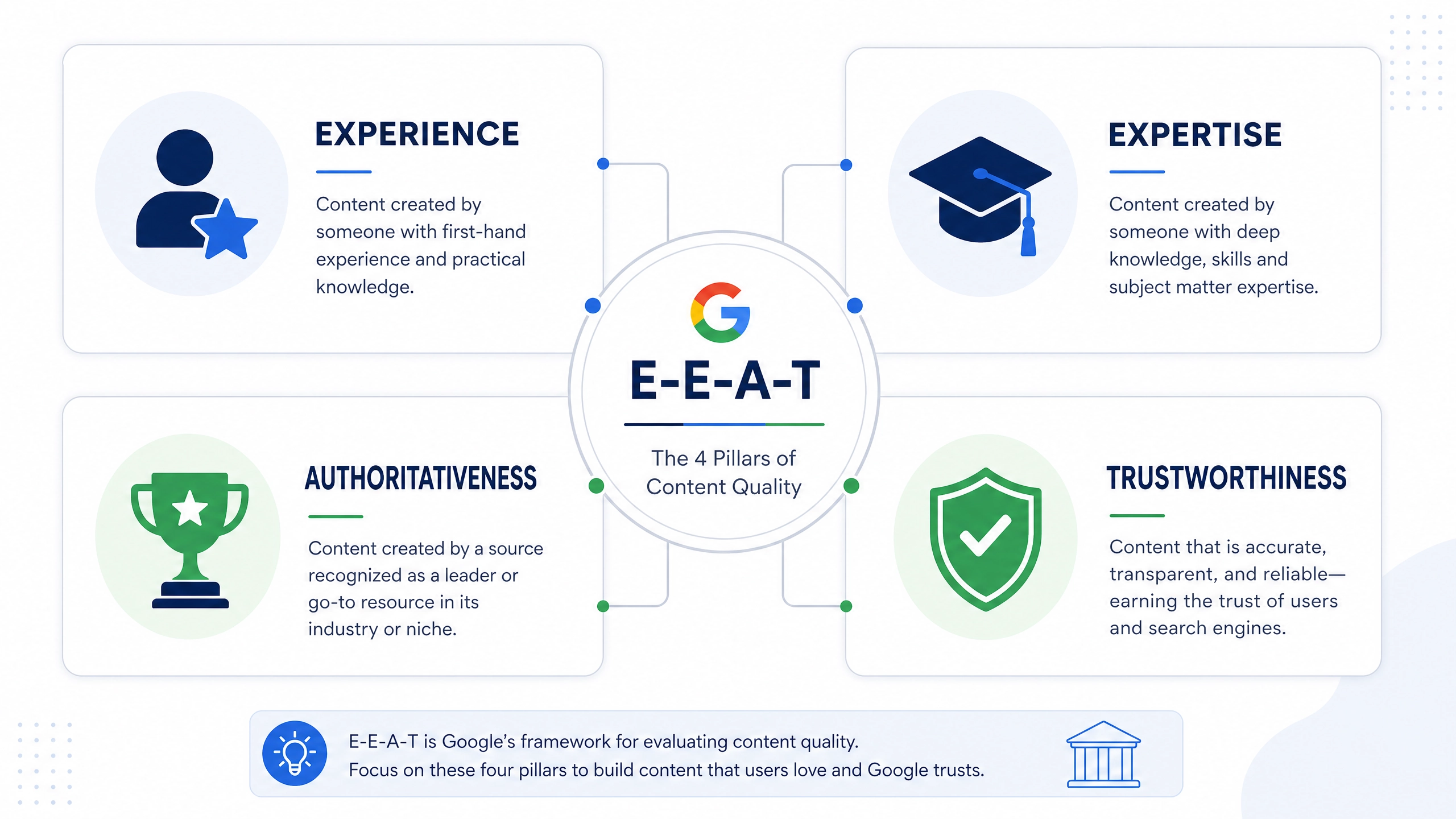
Google's E-E-A-T framework evaluates content across four pillars. AI tools can help with structure, but genuine expertise is still required.
E-E-A-T and Google's Algorithm: Ensuring Compliance
Google's E-E-A-T framework (Experience, Expertise, Authoritativeness, and Trustworthiness) has become a central consideration for anyone publishing content online. AI tools can help you optimize structure and keyword coverage, but they cannot replace the credibility signals that come from genuine expertise and clear authorship.
The most effective approach treats AI as a research and structuring assistant, not a replacement for subject matter knowledge. Content that ranks well in 2026 tends to combine data-driven optimization with real human insight.
Expert Insights on AI and SEO
SEO professionals who work closely with Google's quality guidelines have consistently emphasized that AI-generated or AI-assisted content is not inherently problematic. What matters is whether the content genuinely helps the reader.
Lily Ray, a well-known authority on E-E-A-T, has noted that content quality signals go beyond technical optimization. They include author credentials, original perspectives, and clear sourcing. Eli Schwartz has similarly pointed out that AI tools work best when they inform a human-led strategy rather than replace it. Both perspectives reinforce the same principle: use AI to improve your content, not to skip the thinking that makes it valuable.
Best Practices for AI-Optimized Content
A few practical habits will keep your AI-assisted content on the right side of quality guidelines:
- Always match your content to the actual search intent behind the keyword, not just the keyword itself. Understanding the difference between what people search for and what they actually want is worth exploring in depth through resources on search volume versus search intent.
- Add original examples, data points, or perspectives that AI tools cannot generate on their own.
- Include clear author information and link to credible sources where appropriate.
- Review every piece of AI-assisted content before publishing to catch inaccuracies or generic phrasing that does not reflect your brand voice.
A Note on Citations
Some market research figures cited in AI-generated content (including growth projections and adoption percentages) may be estimates or projections rather than verified published data. Always cross-reference statistics with primary sources before using them in client-facing materials or formal reports.
Final Thoughts
AI content optimization tools have moved well past the experimental stage. In 2026, they are a practical part of how effective content gets planned, written, and improved. Whether you are managing a single website or a portfolio of client projects, these tools can help you produce better work in less time.
The key is using them thoughtfully. They are most valuable when they support your process rather than replace your judgment. The data they surface is only as useful as the decisions you make with it.
Start by identifying one clear bottleneck in your current workflow, whether that is keyword research, brief creation, or post-publish optimization. Find a tool that addresses that specific gap, test it consistently for a few weeks, and measure the results. That focused approach will tell you more than any feature comparison chart.
And if you are ready to add AI search visibility tracking to the mix, RankPilot is free to try. It shows you exactly which of your pages are appearing in AI Overviews and AI Mode, so you can see the full picture of how your content is performing in 2026 search.